
Learn More About the Reading Benefits Nobody’s Telling You!
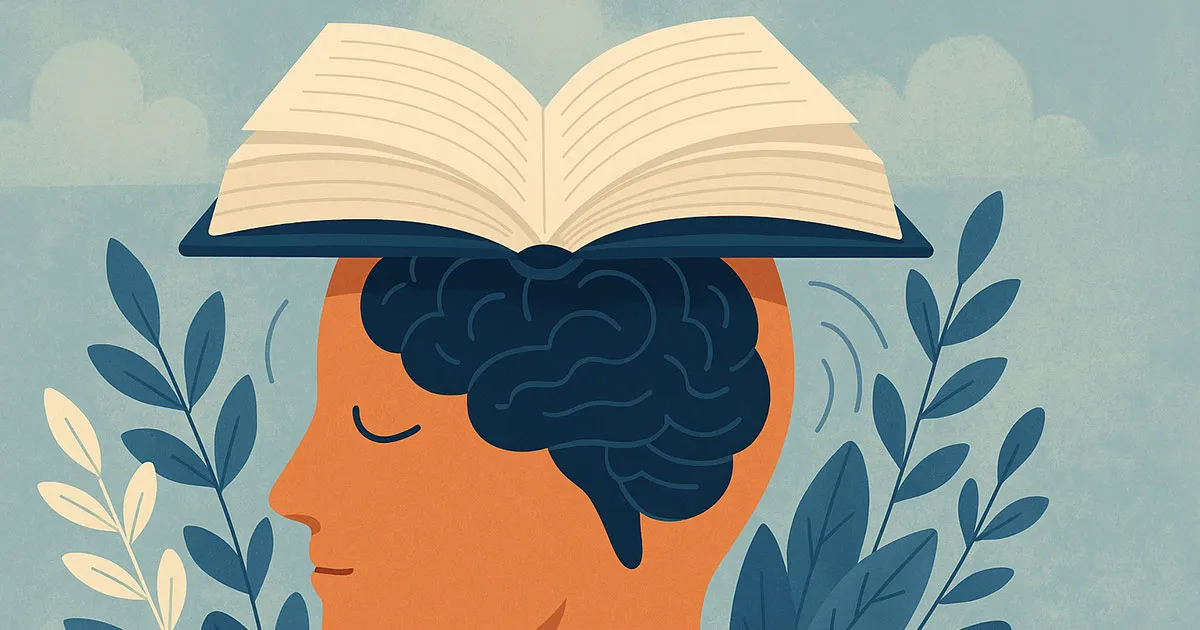
Imagine a world where students lack books, a scenario that feels unnatural, eerie, and unimaginable even today. Books are the essential fuel for human brain development, acting as powerful tools for social change that have ultimately triumphed over brute force in shaping our modern world. Yet, are we truly harnessing this potential? This article delves into the often-overlooked benefits of reading that can alter your perspective and sharpen your mind. From boosting cognitive growth in children to enhancing creativity in adults, find out in this article how sticking your nose in a book truly changes your life.
Earlier Impact: Reading Benefits for the Child’s Mental Development
In the early stages of childhood, children are evolving their cognitive and emotional growth. In a study conducted by the American Academy of Pediatrics, it was shown that children with regular access to books developed a more complex cognitive network. They also excelled at brain connections related to imagination, language learning, and comprehension.
When searching through the lines and living the story themselves, children start to characterize and visualize the personalities, the environment, and build an imaginary relationship with them. This helps their creativity better than they can ever do it with soulless pictures in the media and on phones. Unlike videos, books require the child’s mind to create the world from words.
Key benefits for kids:
- Stronger vocabulary and language skills
- Improved emotional intelligence and empathy
- Enhanced imagination and creative thinking
Reading improves imagination by encouraging children to ask questions, predict outcomes, and explore alternative realities.
What Are the Core Reading Benefits for Students

Reading benefits for students come tenfold. They can imagine their problems through the scope of the world and learn from it. By reading daily, students learn from fictional characters’ decisions and can put themselves in their shoes. The very “what would this character do in my situation” and maybe get a new perspective. They also have a pleasurable and exciting time of diving into a new realm, mixed into the whole thing. It helps them forget their stress and pressure as they turn to the earliest page.
Essential Reading Benefits for Student Success and Cognitive Growth
- Higher academic performance across subjects
- Better focus and memory retention
- Improved writing and communication skills
- Enjoyable and memorable time
More schools incorporate the idea of pushing their students towards the word-ridden pages of ordinary books. This way, they empower their students with mental resilience.
Importance of Reading Activities in Daily School Life
As we stray further from the old ages, books become more relics of the near past than anything else. They’re no longer the guidance humanity needs and relies on. Digital screens, influencers, and short-term dopamine-inducing videos have consumed us.
That’s why in some schools, they’re reverting back to the old times where daily reading is a must. That’s a reading benefit for everyone in these educational systems.
“By reading daily, students learn from fictional characters’ decisions and can put themselves in their shoes.”
Some education systems include dedicated reading periods or literacy classes, especially in early grades, while others integrate reading into subjects like language, science, and social studies. Countries with strong education systems often make daily reading a routine rather than a test-based subject. Overall, schools around the world agree that reading is essential for the brain, for growth, and for the imagination to flap freely in the infinite vastness of ideas!
How Does Reading Improve Creativity
We can only imagine so much. And when that tank empties, we’re left stranded and stuck. That’s one of the most crucial aspects of reading, as it throws us into the ideas and dreams of the writer. It tickles our imagination and raises the question of “what if.” And, at that moment, our imagination is growing and learning. And that’s a benefit of reading unmatched in price.
Right now, with the advancements in neuroscience, we can prove how different brain regions activate and operate. When reading a fictional adventure and storyline, multiple regions begin to light up simultaneously. Out of them, the parts associated with imagination and empathy spark the brightest of the lights.
- How reading creativity develops:
- Exposure to diverse narratives and viewpoints
- Expansion of mental associations
- Strengthening abstract thinking
This explains why reading creativity is often stronger in individuals who read across genres.
What does Reading Teach You about the World?
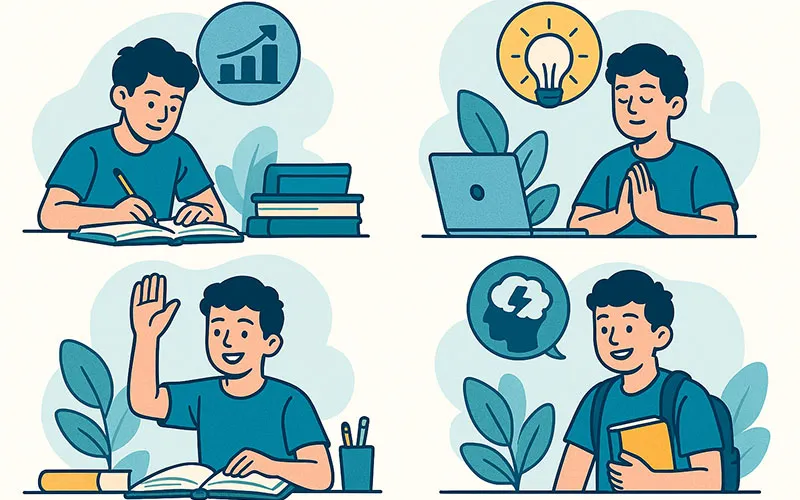
The better angle here would be what it doesn’t teach us about the world! Every turn of the page is like hiking through the minds of a nation, a culture, and a community. Reading exposes you to different beliefs, mindsets, and cultures. And lets you experience them as they should be, in the way different societies actually work, not as you might think they do through mostly-falsified media. Each line is the outcome of someone or something happening! And, there’s no price on that.
“When reading a fictional adventure and storyline, multiple regions begin to light up simultaneously.”
Another core benefit of reading is fostering a sense of empathy, the humane side of us. It preaches the reality of different lives in any corner of the world, for as little of couple of bucks. No lesson is greater!
The importance of reading activities in schools cannot be overstated. Daily reading sessions help normalize curiosity and self-learning. Schools that integrate reading circles, storytelling, and free reading time report higher engagement and creativity among students.
Advantages of Reading Beyond Academics
While stellar grades are a wonderful outcome, the true power of literature lies in its ability to nurture the human spirit and broaden our understanding of the world. Engaging with diverse narratives allows us to inhabit the lives of others, cultivating deep empathy and emotional intelligence that no textbook can replicate. These reading benefits extend far beyond the classroom, helping us navigate complex real-world relationships and fostering a profound sense of connection to humanity.
Furthermore, immersing oneself in fictional realms serves as a vital escape from daily pressures, acting as a sanctuary for mental relaxation and stress reduction. This immersive experience sparks creative thinking, challenging us to envision new possibilities and alternative realities. By exercising our imagination, we develop cognitive flexibility, proving that the advantages of nurture provided by consistent reading are essential for personal growth and holistic well-being.
How Reading Serves as a Bridge to Hope and Open-Mindedness
In a world often divided by misunderstanding, books act as a powerful bridge connecting us to experiences far beyond our own lives. When we engage with narratives from different cultures, eras, or perspectives, we break down the walls of prejudice and cultivate true empathy. This profound benefit from reading books allows us to walk in another person’s shoes, fostering a more open-minded approach to the world around us. It teaches us that while our circumstances may differ, our fundamental human emotions are remarkably similar.
Furthermore, literature serves as a beacon of hope during challenging times, proving that resilience is a shared human trait. Reading stories of triumph over adversity inspires us to face our own obstacles with courage and optimism. The therapeutic benefits of reading go beyond simple entertainment; they offer a sanctuary for the mind and a roadmap for personal growth. By exposing ourselves to diverse stories, we not only expand our knowledge but also nourish our souls with the belief that a better future is possible.
How Parents and Schools Can Encourage Reading Creativity
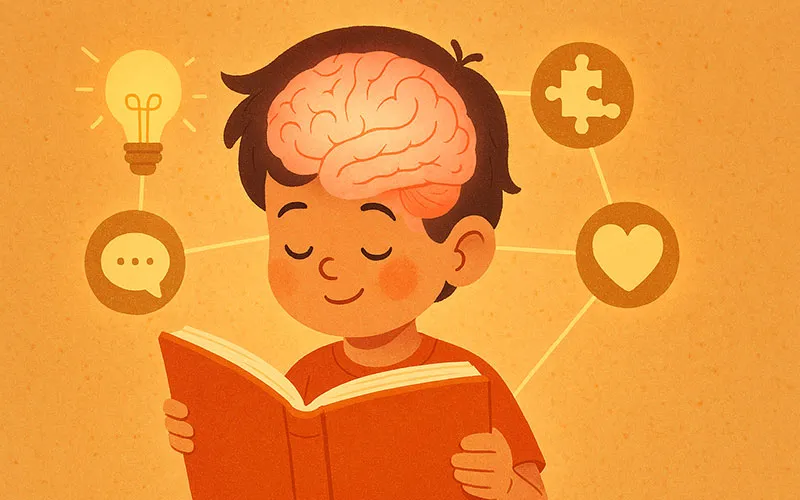
Fostering a love for books requires a collaborative effort between home and classroom to truly unlock the lifelong reading benefits for children. By creating environments that spark curiosity, parents and schools can help turn reading into an exciting adventure rather than a chore. Here are some effective ways to encourage this creative spark:
- Create Dedicated Reading Spaces: Establish cozy, inviting corners filled with diverse books to make reading feel like a special treat.
- Model the Behavior: When children see adults enjoying books, they are far more likely to mimic that curiosity and habit.
- Engage in Interactive Discussions: Move beyond just reading by asking open-ended questions about character motivations and alternative plot twists.
- Promote Choice: Allow children to select books based on their own interests, fostering autonomy and a genuine passion for discovery.
Final Thoughts: Reading as a Lifelong Growth Tool
Whether we like it or not, we ban it or not, or we forget it or not, books have a way of coming back to us. And, with them, the benefits of reading, of lifting heavy papers glued to one another to see the shy meaning between the lines.
As we move further with technology, we are always in a dance with this love-hate relationship with the old scribbles on pages. Technology wants us to forget them, but as students, adults, and even children, we’re drawn to them.
Daily reading is a must, even so minute! Students can learn so much from the stories of other characters, develop stronger personality traits and cognitive growth, and become more resilient. Their creativity will thank them for their time spent bent over the pages as well!
By embracing reading as a daily habit, we open the door to imagination, empathy, and continuous learning.