
Second Language Acquisition: Unlocking the Benefits of Learning a Second Language

Learning a second language doesn’t necessarily translate — no puns intended — to learning English! Not in the least. On the contrary, the uproar for learning multiple new languages soars as travel gets cheaper, multinationalism and immigration become more mainstream, and it’s just too darn fun to learn something that not everybody speaks!
The benefits of learning a second language come in plenty, and they’re very gratifying! From boosting cognitive skills to confidence to opening up the gateway to new and exciting worlds, the list goes on and on! Let’s learn more, or as the Germans amusingly put it: “Lasst uns mehr erfahren!”
It’s not a Second Language, it’s a Second Chance!
What’s a second language? Is it just the socially accepted way of communication between one group of people or people? Or is it a lost concept to tribalism and separation? Are those similar words we hear in other verbal forms just a hint to our mutual ancestry dating back thousands of years ago?
1. Boosts Brain Power and Cognitive Flexibility
Our brain grows as one of the most influential effects of learning a second language. When speaking in another tongue, our brain goes through a frenzy of stasis, trying to find the best set of words for you to utter. This is like hitting the hard gym day for your brain, improving your cognitive flexibility —the ability to adapt thinking, shift attention, and approach problems from different perspectives.
Furthermore, the more languages you learn, the more problem-solver and the final-sayer you become, according to the studies back! This gymnastics of fast focus shifts and responding in an effective manner to a complex situation buffs up your mind’s gray cells.
2. Improves Focus, Memory, and Attention Control
When in the realm of second language acquisition, there comes a barrage of new vocabulary, grammar borders, and language structures. While striving to learn these, your brain, and specifically your memory slot, strengthens and becomes more potent. You are teaching your brain to store information perpetually and call upon it whenever needed, in a split second. It’s almost like inventing your own modern teaching methods.
That’s not all the exercise you’re doing, though. Every dialogue in a language other than your mother tongue requires your brain to become a maniac dictator and suppress the urge to spit out something entirely incorrect. This means control. For your brain to crack down on unwanted elements, it will intensely focus on the task at hand, leaving no room for any distractions. This builds up organizational and attention skills.
3. Protects the Brain and Supports Lifelong Mental Health
Rarely do we realize that learning a new language can actually help you keep your brain health up and good! If you’re a polyglot, studies love you since they’ve proven the direct correlation between age-related cognitive decline or other diseases like dementia and speaking another language.
“Furthermore, the more languages you learn, the more problem-solver and the final-sayer you become, studies back!”
All of the good points pointed out above point out to students and young learners having money in the bank for the future!
4. Enhances Academic Performance Across Subjects
With a second language acquisition, you’re not only leveling up your language skills. You’re also increasing your learning potential across all courses and curricula. Studies have shown that bilingual students excelling at subjects such as science, humanities, and even mathematics.
It’s no brainer too. With your brain teaching itself to focus better and find results faster, it could be expected that the same outcome would be replicated in other areas. So it’s safe to say that with the cognitive improvements, all your study subjects benefit! But we don’t mean to drop them altogether in the pursuit of learning new vocabulary learning techniques in any way!
Teachers and educators should take advantage of the opportunity as well, as some might find themselves at a crossroads with it. They should encourage and push the polyglot students to continue on their path to understand another culture and language, as it’s prone to bring about clearer and more critical thinking elsewhere.
5. Strengthens Reading, Writing, and Learning Skills
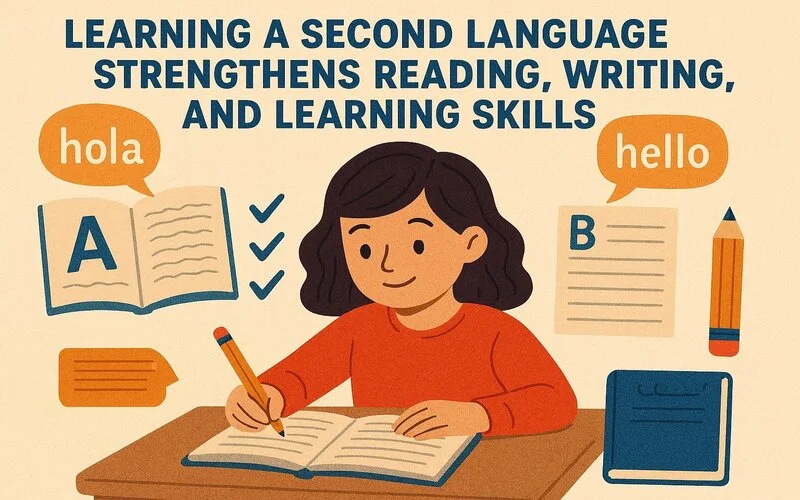
When knee-deep into another language, the pages of its literature, poetry, and everyday talk start to unfold around you. As one of the benefits of reading and writing in another language, your handwriting and memory skills improve drastically.
This is all out of a concept called language awareness. With every single word memorized or a strand of them cemented into a sentence, a greater knowledge of the subject carves itself in the back of your head. This means you get more out of the grammatical patterns, you form sentences quicker, and your day-to-day vocab spruces up with new and exotic concepts and words.
It also, and very unconsciously, makes you into a better and more careful reader, as well as a better communicator and facilitator. All of this is because you have a deeper sense of what constitutes a language, what helps it evolve, and how it is used across a nation.
6. Boost Social Confidence

It’s no sun-behind-the-cloud that polyglot and multi-lingual people garner more attention, and, with it, more self confidence and social standing. Studying a new language and being able to talk your way in it not only gives you the confidence to go out and talk to people but also makes you better at it as well. Granted, the first few times might kill you before you get your vowels out to a foreign-tongue speaking stranger!
However, in the long haul, it comes full circle. Multilinguals develop a deeper and crystal-clear analysis of tone, audience, and context. As a result, they know how to enter a conversation or shift it in their preferred direction. This comes in extremely handy in the classroom, where you’re tasked with communicating!
7. Increases Cultural Awareness and Global Understanding
When you’re reading and writing in another language, it’s not just words spinning around in your thoughts. It’s also the history, the culture, the etiquette, and the way another nation thinks and its people conduct themselves. It shows what’s important to them, what gives them pride, and what shapes their decisions. It’s seeing the world from another angle!
This helps you better understand your classmates, and even your teacher, stopping factions and frictions. In more cases than not, students of a singular class come from different cultural, social, and ethnic backgrounds. Learning a new language shows its promise exactly in this type of enclosure.
Moreover, the global effects are undeniable. Instead of thinking of only one place, students will learn how to sculpt and transmit their ideas more effectively and wholesomely. And what teacher doesn’t love a student who could see the world through the eyes of their peers!
8. Supports Early Brain Development in Children
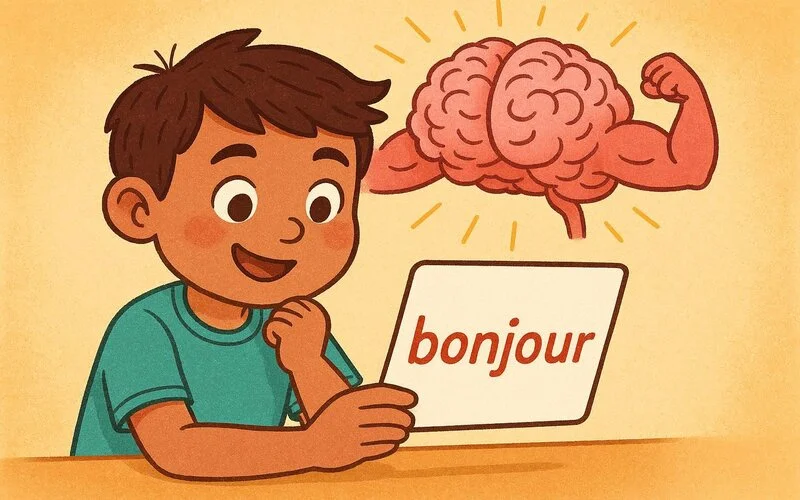
We talked about the more mature-aged students, but not what impact the benefits of learning a second language can have on children and adolescents. And it’s crucial to say the upside of it is by no means short of tremendous. It helps with brain development and neural plasticity, which allows kids to detect and absorb new stimuli more naturally than adults. That’s why children mimic accents better and have an easier time deciphering the incoming chatter from foreign-tongued natives!
It shouldn’t go amiss that learning a second language as a toddler helps cognitive flexibility, memory, and problem-solving abilities in kids. And, if combined with a positive-based system, it will stick and stay with the child for the rest of their life.
9. Expands Career Opportunities and Future Earning Potential
We’ve officially entered a globalized world where knowing just one foreign language doesn’t cut it anymore. And, in this interconnected world, employers value individuals who can communicate effectively, or talk the talk, in multiple languages. As a result, the more foreign tongues you master, the more international doors open to you to extend your education, find the best career, and establish cross-cultural relations.
“As a consequence of reading and writing in another language, your handwriting and memory skills improve drastically.”
If it’s not obvious, with better career choices, goes up the earning potentials. It’s safe to say that multilinguals and polyglots are favored across the business, healthcare, education, tourism, and technology sectors. Learning to speak another language gives you the upper hand in these sectors and many more.
This benefit highlights that language learning is not only an educational investment but also a strategic step toward professional growth and future success.
10. Encourages Lifelong Learning and Adaptability
When you learn something new, especially the verbal etiquette of another country, you’re promoting learning in your mind. For the rest of your life, you’re cursed with the pleasure of knowing stuff and striving to learn even more. And that’s one of the top benefits of learning a second language.
You may ask why! Well, it’s because it’s a gradual build-up and requires immense patience, perseverance, self-control, and motivation. You do so, and we guarantee that the effects will become prominent and life-changing!
It’s a well-known fact that bilinguals have better problem-solving mindsets and are less intimidated by difficult challenges. It’s imperative for students trying to make it in an ever-changing world.
If you’re convinced by the benefits, here’s how to turn intention into action:
- Start Small and Stay Consistent
Set achievable goals such as learning 10 new words a day or practicing for 10–15 minutes. Consistency matters more than intensity. - Integrate the Language into Daily Life
Change your phone language, follow social media pages, or watch short videos in your target language. Exposure builds familiarity naturally. - Embrace Mistakes as Progress
Fluency comes from use, not perfection. Making mistakes is a sign that your brain is actively learning. - Use Smart Learning Tools
Language apps, flashcards, podcasts, and short videos make learning more engaging and effective—especially for students and children. - Practice with Real People
Language exchange partners, study groups, or online communities dramatically boost confidence and speaking ability. - Make Learning Fun for Children
Songs, games, stories, and cartoons in another language help children learn faster and retain information longer. - Track Your Progress Weekly
Write down what you’ve learned each week. Visible progress increases motivation and long-term commitment.
FAQ
1- Why should students learn a second language?
It improves brain function, academic performance, communication skills, and prepares students for a global future.
2- Does learning another language boost brain power?
Yes. It strengthens memory, focus, problem-solving, and cognitive flexibility.
3- Is it better to start learning a language early?
Yes. Children learn languages faster and gain long-term cognitive benefits.
4- Can it help with other school subjects?
Absolutely. Language learning improves focus and thinking skills that transfer to all subjects.
5- Does learning a second language increase confidence?
Yes. It boosts social confidence and communication abilities.
6- How does language learning improve cultural awareness?
It helps students understand different cultures, perspectives, and ways of thinking.
7- Does being bilingual help mental health later in life?
Yes. It may delay cognitive decline and support lifelong brain health.
8- Does learning another language help careers?
Yes. Multilingual skills increase job opportunities and earning potential.
9- Is learning a second language only about English?
No. Any language provides cognitive, cultural, and professional benefits.
10- Does learning a new language encourage lifelong learning?
Yes. It builds adaptability, perseverance, and a love for learning.